The Ewing Lecture Series was established in 1973 to honor Robert H. Ewing for his 27 years of teaching and service at Lycoming College. A revered teacher and friend of the College, his life was characterized by a deep religious faith, a passion for history, and a strong devotion to a liberal arts education. These qualities touched the lives of all who came in contact with him and led his many friends to establish this annual Lecture Series to bring distinguished historians to campus to share their work with the Lycoming community.
Eric Gonzaba, Ph.D.
March 24, 2026, 7:30 p.m.
Trogner Presentation Room
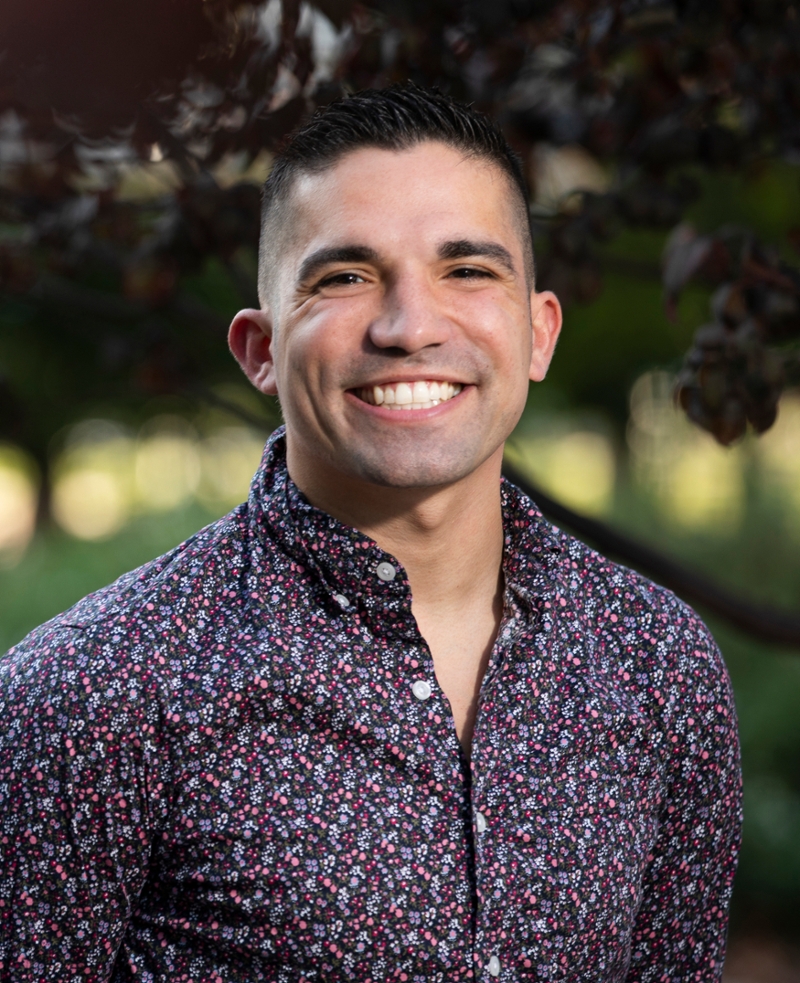
Eric Gonzaba, Ph.D., will deliver a talk entitled, “The Night the Gays Made: American Gay Nightlife after Stonewall,” for the 51st Ewing Lecture. Gonzaba’s talk will explore the blossoming of gay nightlife across the United States beginning in 1970, inviting listeners to consider how bars, baths, and other nightlife spaces were central to how everyday gay men experienced freedom in the aftermath of the 1969 Stonewall Uprising. While histories of gay liberation often emphasize activism, court cases, and political organizations, this lecture shifts attention to the far more common experience of American gay men whose primary encounter with gay community took place after dark.
Informed by digital history methods that make a national perspective now possible, the talk draws on hundreds of thousands of listings from historical gay travel guides. Gonzaba shows that gay nightlife was remarkably widespread across the United States, not an isolated urban anomaly but a generalizable feature of post-1970 gay male life. Though often embraced by gay men as apolitical spaces, nightlife sites became centers of conflict over race, gender, policing, and public health. Rather than framing nightlife as either liberation or excess, this lecture argues that post-Stonewall nightlife offered a negotiated freedom that was limited, contested, and meaningful. It reveals how gay liberation was built not only in protest marches or at the ballot box, but also on dance floors, at bar counters, and in the geography of the urban night.
Gonzaba, associate professor of American studies at California State University, Fullerton, is a historian of race, sexuality, and nightlife in the United States. He leads several award-winning public digital humanities projects.
In 2014, Gonzaba founded “Wearing Gay History,” an online archive and museum that explores global LGBTQ+ history through T-shirts; in 2016, the project received the National Council on Public History’s top student prize. In 2019, he co-launched “Mapping the Gay Guides,” with Amanda Regan, Ph.D., a digital mapping project that uncovers overlooked queer geographies through historical gay travel guides. The project received the 2021 Emerging Open Scholarship Award from the Canadian Social Knowledge Institute and an honorable mention for the 2020 Garfinkel Prize in Digital Humanities from the American Studies Association.
From 2021 to 2024, Gonzaba served as chair of the LGBTQ+ History Association, the nation’s oldest organization of queer historians, and he co-chaired and hosted the 2024 Queer History Conference. His work has been generously supported by the Point Foundation, the National Endowment for the Humanities, and the Elton John AIDS Foundation.
Past lecturers include:
- 2025 — Dr. Eric Goldberg
“Soldiers, Rapine, and the Decline of an Empire”
- 2024 — Dr. Arunima Datta
"Waiting on Empire: Indian Travelling Ayahs in Britain"
- 2023 — Dr. T. Cole Jones
“The Tory Rising: Insurrection in the Revolutionary South”
- 2022 — Dr. William Chester Jordan
"The Harvest Indeed is Great, but the Labourers are Few; Strangers in the Medieval Countryside"
- 2019 — Dr. Jane Dailey
"White Fright: Sex, Race and the African American Freedom Struggle"
- 2018 — Dr. Peter John Brobst
"Two Navies, One Highway: Britain, America, and Global Sea Power since 1968"
- 2017 — Dr. Diane Sommerville
"The Accursed Ills I Cannot Bear"
- 2016 — Dr. Paul Freedman
"Basic Principles of Medieval Cuisine"
- 2015 — Dr. Jonathan Scott Holloway
"Whose Memories Matter? Race, Identity, and the Battle for American History"
- 2014 — Dr. Leslie Brown
"Power Politics in the Civil Rights Era"
- 2013 — Dr. Edward Ayers
"Where Did Freedom Come From?"
- 2012 — Dr. Stanley Katz
"Can the Liberal Arts College Help to Save Democracy?"
- 2011 — Dr. David Witwer
"The Acid Attack on Victor Riesel and the Racketeer Menace in Cold War America"
- 2010 — Dr. Barbara A. Hanawalt
"The Detection of Fraud in the Victualing Trade in Medieval London"
- 2009 — Dr. Antulio Echevarria, II
"An American Way of War or Way of Battle?"
- 2008 — Dr. Kevin Boyle
"Arc of Justice: The Sweet Case and the Course of Civil Rights"
- 2007 — Dr. James H. Merrell
"Revisiting and Revising the Colonial American Frontier"
- 2006 — Dr. John J. Contreni
"What Should We Know about the Crusades?"
- 2005 — Dr. Gabor Boritt
"The Most Important Election in American History?"
- 2004 — Dr. David Nasaw
"Andrew Carnegie: Marking Sense of Making Millions"
- 2003 — Dr. Mark E. Neely Jr.
"The American Civil War: Foretaste of Terror?"
- 2002 — Dr. William H. Flayhart III '66
"Perils of the Atlantic: Ship Disasters of the 19th Century"
- 2001 — Dr. Robert H. Zieger
"Race and Labor in 20th Century America"
- 2000 — Dr. Ira Berlin
"The Role of Memory in Writing the History of Slavery"
- 1999 — Dr. John Lewis Gaddis
"We Now Know: Rethinking Cold War History in light of Recent Revelations from Soviet Archives"
- 1998 — Dr. James T. Patterson
"America's Grand Expectations After World War II"
- 1997 — Dr. Michael Burlingame
"Emphatically the Black Man's President: Abraham Lincoln & Frederick Douglass"
- 1996 — Dr. Henry Friedlander
"The Origins of Nazi Genocide"
- 1995 — Dr. Joan Hoff
"Women and the Constitution"
- 1994 — Dr. Barbara Sicherman
"The Education of Jane Addams"
- 1993 — Dr. Mary Beth Norton
"The Curious Incident of the Gossiping Ladies of New Haven: Gender and Society in Seventeenth-Century America"
- 1992 — Dr. Roland G. Foerster
"Defense and Sovereignty: Ten Theses on German Rearmament after the Second World War, 1945-1950"
- 1991 — Dr. Martin E. Marty
"The Twentieth Century American Religious Scene: Important Conflicts/Few Dead Bodies"
- 1990 — Dr. John M. Murrin
"Baseball, Football and Nineteenth Century American Political Culture"
- 1989 — Dr. John Wilson
"Original Intent and the Church State Problem"
- 1988 — Dr. Peter Paret
"The History of War as Part of General History"
- 1987 — Dr. Edward Pessen
"George Washington Against the Cold War"
- 1986 — Dr. James H. Smylie
"Jefferson's Statue for Religious Liberty: Historical, Social, and Constitutional Contexts"
- 1985 — Dr. Michael Vlahos
"Strategy and National Culture"
- 1984 — Dr. Carl E. Prince
"The Great Riot Year: Jacksonian Democracy and Patterns of American Violence in 1834"
- 1983 — Dr. Robert T. Handy
"Common Themes in the Diverse History of Religious Groups in America"
- 1982 — Dr. Harold E. Deutsch
"The Influence of Ultra in World War II"
- 1981 — Dr. Edmund S. Morgan
"The Invincible Yeoman Farmer"
- 1980 — Dr. Hans Hillerbrand
"The Reformation and the Peasants' War: Reflections on Social History"
- 1979 — Dr. Thomas Barnes
"Legal History: Does It Have a Past? Does It Have a Future?"
- 1978 — Dr. Michael Kammen
"The American Revolution and the Historical Imagination"
- 1977 — Dr. Oron Hale
"Administration of Occupied Territories After World War II"
- 1976 — Dr. Willie Lee Rose
"Domesticating Domestic Slavery"
- 1975 — Dr. John Shy
"Hearts and Minds in the American Revolution: The Social Impact of the Revolutionary War"
- 1974 — Dr. Roland Bainton
"Erasmus and the Reformation"