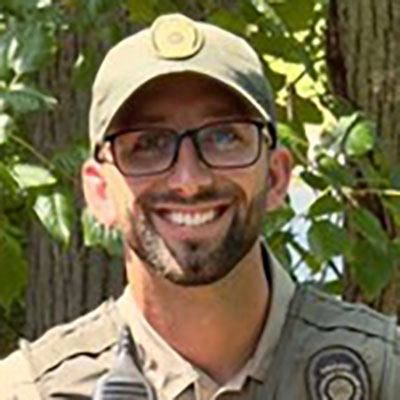
Shane C. Casey '21
Waterways Conservation Officer (WCO) for the Pennsylvania Fish & Boat Commission
Criminal Justice Major/Environmental Science Minor
Background:
As a Waterways Conservation Officer for the Pennsylvania Fish & Boat Commission, I am a state officer specifically trained in fishery conservation, watercraft safety, and environmental protection. I work with other state agencies like the Pennsylvania Game Commission and Department of Environmental Protection, protecting Pennsylvania’s natural resources. When I am not engaged in patrol, I find myself interacting with the public, conducting education and information outreach to clubs, schools, and communities.
How did you become interested in criminal justice, and what was it like studying criminal justice at Lycoming College?
I first became interested in criminal justice when I was younger and had attended Camp Cadet hosted by the Pennsylvania State Police. Additionally, I had a few mentors who served in law enforcement that inspired me to follow in their footsteps. Studying criminal justice at Lycoming College was both eye-opening and challenging, blending classroom theory with real-world issues. Courses explored law, ethics, criminology, and the justice system, often through case studies. Discussions about crime, punishment, and social responsibility encouraged critical thinking and debate, while internships, and in-person court experiences, offered practical insight into various careers. Overall, the experience grew my interest and passion to better understand the justice system and the complexities behind maintaining public safety.
What was the most impactful educational experience you had while at Lycoming?
One of the most impactful educational experiences I had at Lycoming College was participating in an internship. My internship involved working with youth in an alternative education facility. Here, I learned about real challenges young people face. But with positive reinforcement, mentoring, and a structured program, I learned the importance of patience, empathy, and consistency when building trust. I credit my internship mentors because they taught me a great deal about real-life situations, by observing how mentors handle difficult conversations, make ethical decisions under pressure, and adapt to unpredictable circumstances. Through guidance, feedback, and real-world examples, this educational experience has prepared me to conquer challenges with confidence and is one to remember.
How did your Lycoming education and student experience prepare you for life after college?
College education and the overall student experience prepared me for life after graduation by developing both practical skills and personal growth. Academically, coursework strengthened my ability to think critically, manage time, communicate clearly, and solve problems. These skill sets translate directly into everyday settings, from report writing to investigating. Overall, these experiences helped me transition from an academic student to an everyday uniformed officer, with a stronger sense of responsibility and purpose.
What advice would you give to students thinking about studying criminal justice at Lycoming?
Students considering criminal justice should go in with an open mind and realistic expectations about the field. Take time to explore the different career paths because the major is broader than many people realize. Focus on building strong critical-thinking, communication, and ethical-decision making skills, and seek out internships or volunteer opportunities early to gain real-world perspectives. Most importantly, stay curious and reflective, since working in criminal justice requires not only knowledge of the law but also empathy, integrity and resilience.