You are here:
Art Gallery 2026-27
The Lycoming College Art Gallery and the student-run Lycoming College Downtown Project Space are both located at 25 West Fourth Street in downtown Williamsport. Some exhibitions are housed in both spaces. The gallery is open the following hours during exhibitions.
- Fridays 4-8 p.m.
- Saturdays 10-2 p.m.
- Sundays 4-8 p.m.
The Gallery is closed during academic breaks. Check out our recent Artists-In-Residence: Pedro Lasch, Nicole Dextras and Aaron Hughes.
Upcoming Exhibitions
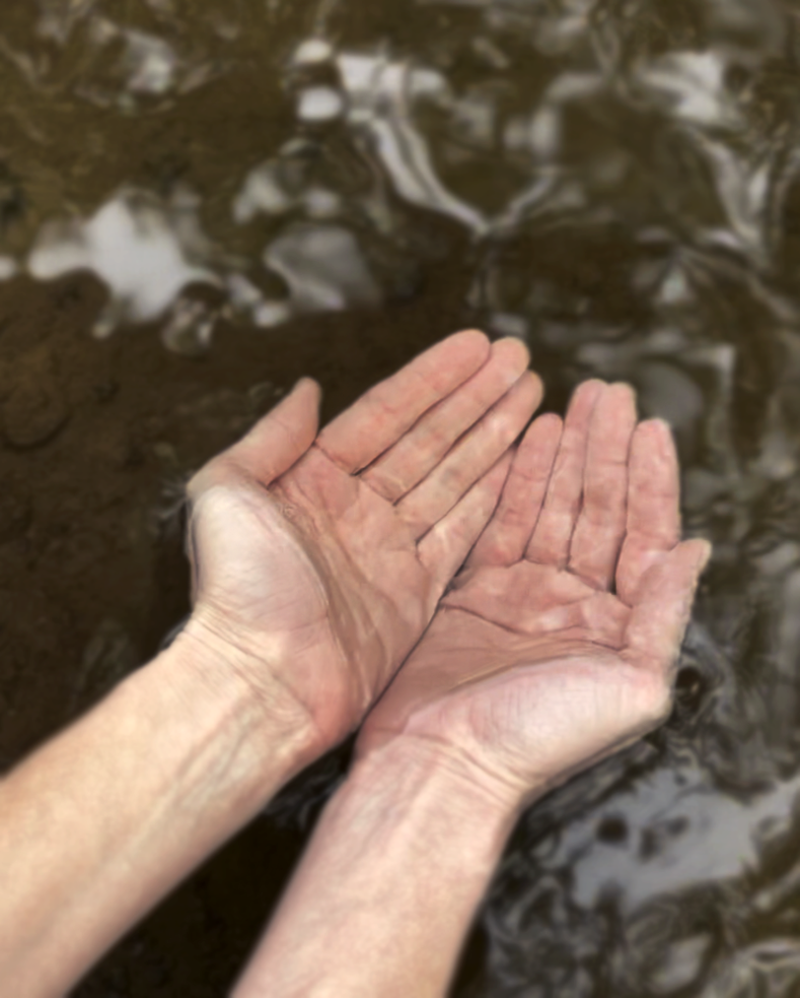
Guadalupe Martinez: Becoming River, 2026, multi-channel video installation with sound.
Guadalupe Martinez: Becoming River
Sept. 4-Nov. 28, 2026
Artist Reception: Oct. 14, 4:30 p.m., Trogner Presentation Room, Krapf Gateway Center
“Becoming River” is contemporary artist Guadalupe Martinez’s solo exhibition at the Lycoming College Art Gallery and the artist’s first show in Pennsylvania. Curated by Marisa C. Sánchez, Ph.D., assistant professor of art history, in collaboration with the artist, “Becoming River” is Martinez’s meditation on the West Branch of the Susquehanna River and its tributaries, and her reflection on the river’s profound presence in the landscape and the surrounding region.
Through her research and in thinking about the river’s existence, the artist expressed “The Susquehanna is an ancestral presence, a humble yet powerful witness. It is over 300 million years old. I was amazed to learn that it predates the Atlantic Ocean and the breakup of Pangaea. This was a profound insight about time, and to the expansive dimensions by which we are constantly relating; being contained by without noticing. A cosmic omnipresence so much larger than ourselves and our culture.”
At the gallery, “Becoming River” is an immersive installation that includes five large-scale projected video works, including three from Martinez’s poetic project “Reflections on a Window Glass” (2020) and the debut of two new videos focused on the river and created by the artist specifically for this exhibition. Filmed in Williamsport, Pa., during the first part of her residency, these two videos explore Martinez’s experience of the river. Conceiving this waterway as a “powerful witness,” Martinez’s approach considers the river’s livingness, which recalls for Sánchez the writings of Robert Macfarlane, who claimed that “Rivers are our first singers, our first storytellers…[they are] a kind of storage medium, as well as a narrative force. We tell our stories with and through rivers.”
In “Becoming River,” Martinez invites viewers to reflect on what this river has held, what it has carried. Visitors to the gallery can contribute to “River Stories,” an interactive section within the exhibit where the artist encourages them to share their stories about their relation to the river. This section of the exhibit provides space for the exchange of ideas and includes images from her “Sensorial Archive: Reserva Costanera Sur,” made between 2012-2015, along the Río de la Plata in Buenos Aires. This work provides further context for her interdisciplinary artistic inquiry that approaches the landscape not merely as a geographic site, but as a living, embodied archive. Martinez has said of this aspect of her Sensorial Archive, “Soil, vegetation, rubble, atmospheric conditions, and the rhythm of the tides carry the deep imprints of political history and ecological transformation. Through walking, collecting, filming, and drawing, my practice attunes itself to these more-than-human forms of remembering, exploring how sensory aesthetics can access historical truths that language and conventional archives cannot hold.” In line with this, Martinez offers visitors a somatic exercise titled “Rock Ritual,” a self-guided exploratory walk that moves beyond the art gallery to the banks of the Susquehanna.
 This project is supported in part by the National Endowment for the Arts’ Grants for Arts Projects (GAP), which was awarded to Lycoming College in support of Sánchez’s grant proposal. To find out more about how NEA grants impact individuals and communities, visit www.arts.gov.
Read more about the exhibition.
Faculty Show
Dec. 4-Jan. 30, 2027
Artist Reception: Dec. 4, 5 p.m.
This year's exhibit brings together five faculty artists, each pulling from a distinct well of experience, history, and craft.
Seth Goodman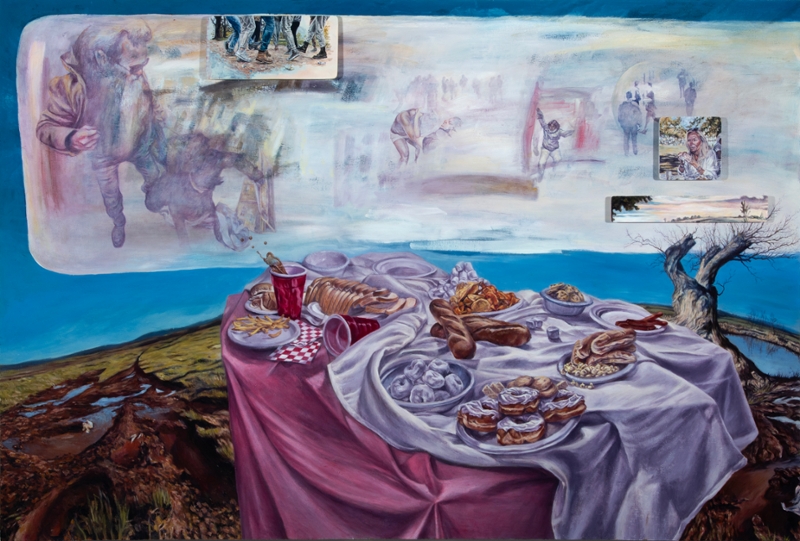
Seth Goodman, associate professor of art, will show works that examine the social and political dysfunction of our times. Celebrity and class worship, the culture wars, and the politics of disinformation become a conceptual focus as his paintings poetically unearth truths that lie just beyond the topical twists and turns of the day.
Andrea McDonough
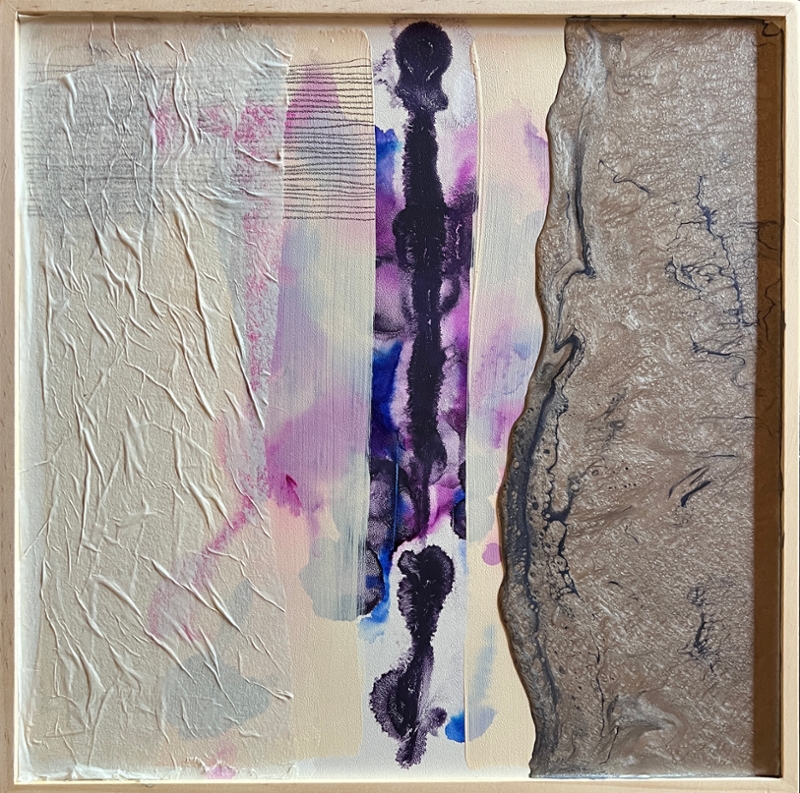 Andrea McDonough, Ed.D., is an avid leader in art education with experience in facilitating transformative professional development for PK-higher education participants. McDonough is the chair of faculty development for an online university and enthusiastically adjuncts for Lycoming College in the art and education departments. She is the current chair for the NAEA Caucus on the Spiritual in Art Education (CSAE), serving members in the United States and abroad. McDonough is a successful grant-writer with a passion for public art and the promotion of social and emotional learning through mindfulness and creativity in diverse education systems. Lovingly referred to as a "fearless leader" by artist educator colleagues, she approaches challenges and opportunities through a pragmatic and compassionate lens.
McDonough’s current visual art practice is a continued exploration of art as meditation and a resistance of telic tendencies. Each piece or series of works embraces intuitive creating and experimentation with varied media. This process-based approach yields unexpected results and nurtures the habit of mindful art making.
Manuel Moreno-Lee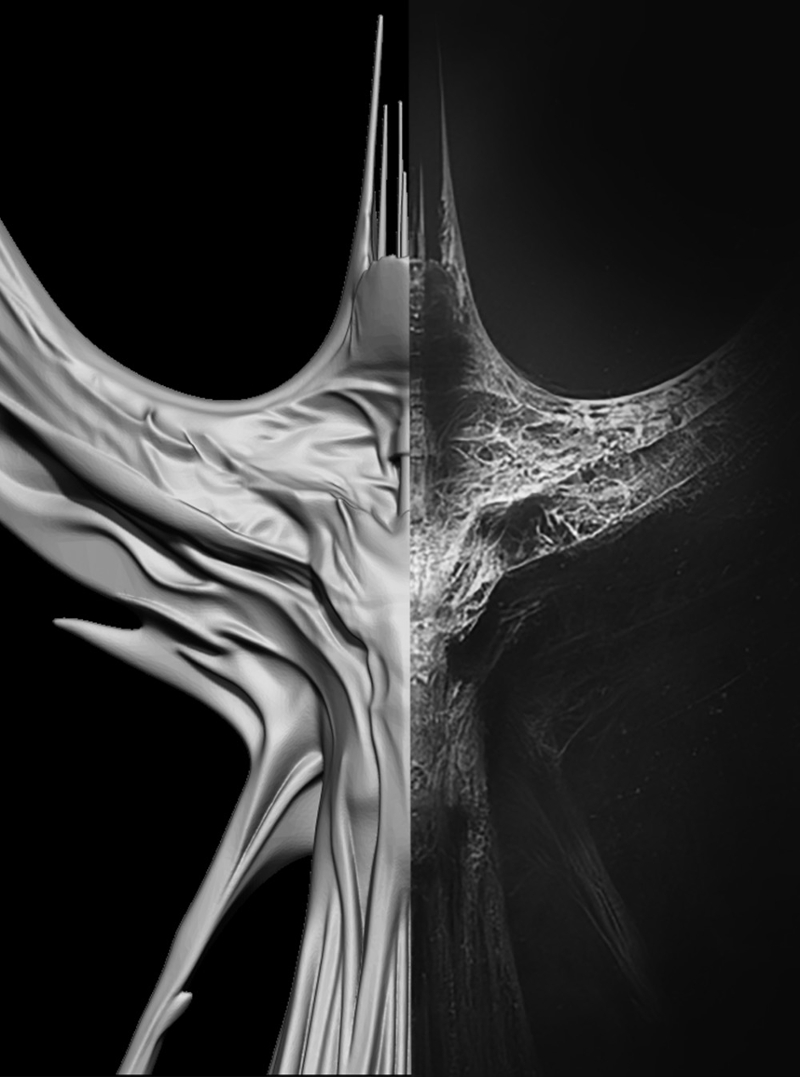
In this exhibition, Manuel Moreno-Lee, assistant professor of art, explores the creative possibilities of concept development and character design, using visual storytelling as a means of exploring ideas and imagined worlds. Through a process of research, experimentation, and visual exploration, his work examines how character, form, and narrative intersect to communicate ideas and evoke emotion. Each design serves as an exploration of identity, imagination, and the visual language of storytelling.
Andreas Rentsch
During his 2024 sabbatical, Andreas Rentsch, associate professor of photography, cleaned up his studio and discovered several boxes of discarded 4 × 5-inch Polaroid Type 55 prints from his “Entangled with Justice” series, which he had worked on from 2005 to 2010.
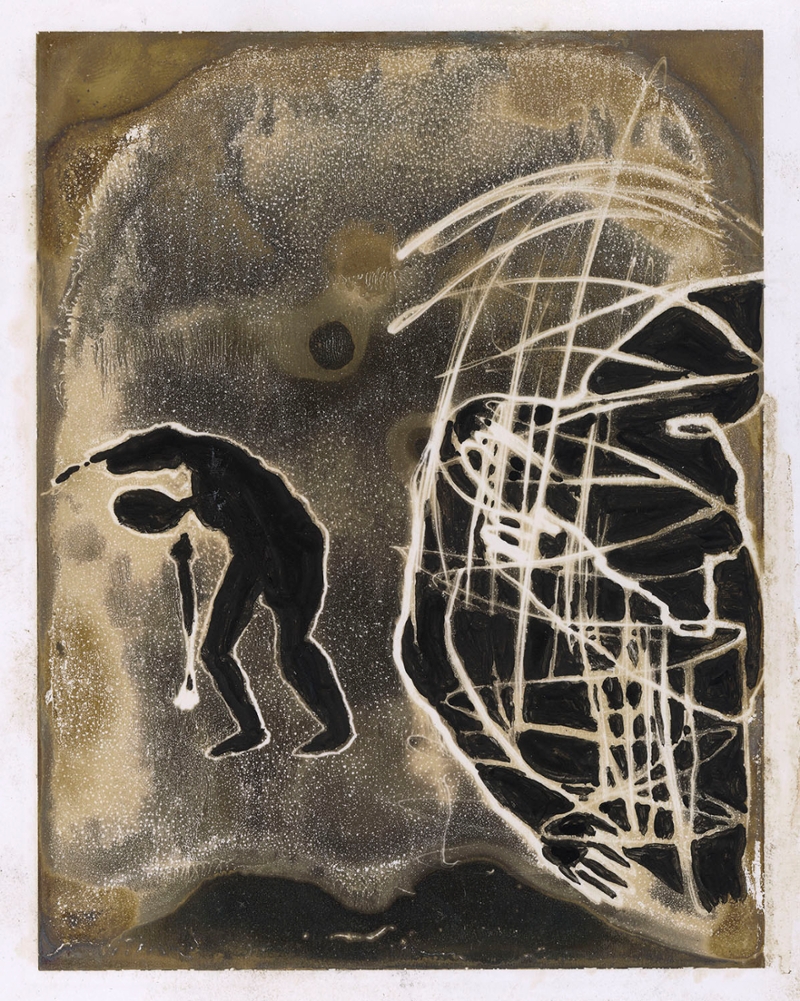 The now-discontinued Polaroid Type 55 film produced a high-quality black-and-white negative alongside a positive print, both of which were processed simultaneously within 30 seconds of being removed from the film holder. Rather than fixing the print and negative immediately, Rentsch allowed them to continue processing for weeks, months, or even years. In most cases, the positive prints became unusable, as ongoing chemical reactions partially or completely obscured the figures in the images. However, he sepia-toned the black-and-white negatives, and the impurities that developed over time resulted in fascinating and unique images. The series has been featured in numerous museum exhibitions and works from it are held in several collections.
While sorting through the rediscovered boxes of Polaroid prints, Rentsch found many images with new potential for a body of work, provided he could find a way to reveal the figures once again. Using a brush and black paint to retrace the lines originally drawn with a flashlight and captured with a 4×5-inch camera, he brought the figures “back to life.”
Rentsch began working on “Entangled with Justice” after seeing the disturbing images documenting the humiliation and mistreatment of Iraqi prisoners by American soldiers at Abu Ghraib. The project launched a long and introspective exploration of how fate, geography, and politics influence the administration of justice. His work is anchored in a moral sensibility rooted in his upbringing on a prison compound in Switzerland, where his father served as warden. These early visual and real-life experiences nurtured a sense of empathy for the human condition that has become a guiding force in both his life and his work.
Howard Tran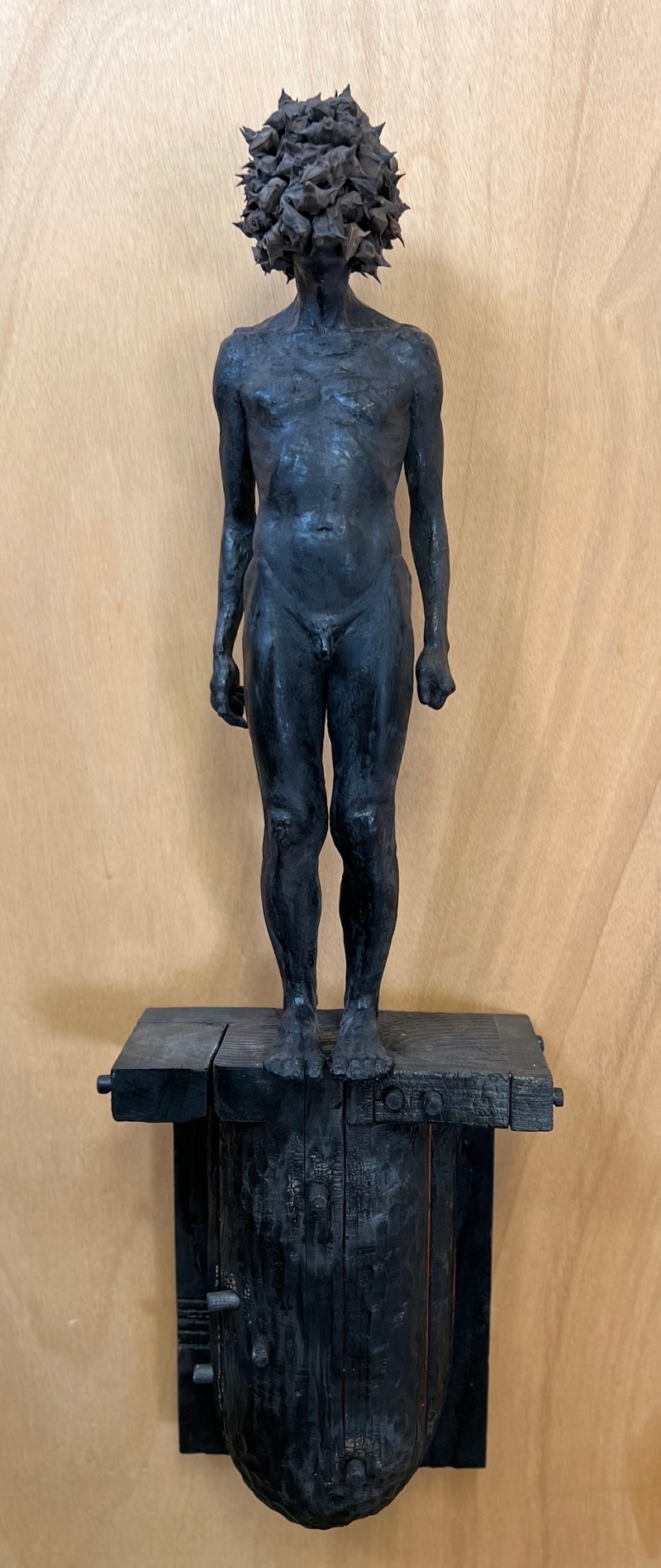
The work of Howard Tran, Logan A. Richmond Endowed Professor, explores the Vietnamese/Chinese philosophy that is influenced by Buddhism, Confucianism, and Taoism — stressing simplicity, worship of ancestors, the cycles of life and connection to nature. His work examines the connections between generations, as well as transition, of moving between East and West. Tran teaches sculpture, drawing, figure modeling and ceramics.
Louie Palu
Feb. 5-March 27, 2027
Artist Reception: Feb. 5, 5 p.m.
Graduating Senior Art Exhibition
April 2-May 15, 2027
Artist Reception: April 2, 5 p.m.
About the Lycoming College Art Gallery:
The Lycoming College Art Gallery is located in downtown Williamsport at 25 W. Fourth St. The gallery contributes to the city’s arts culture and provides a way for the College to become more involved with the community surrounding it. Lycoming art students have the opportunity to interact with visiting artists and their work, as well as learn first-hand the inner workings of a gallery.
This fall, the gallery is open on Fridays 4-8 p.m.; Saturdays, 10-2 p.m.; Sundays 4-8 p.m. For more information, please visit the gallery online.