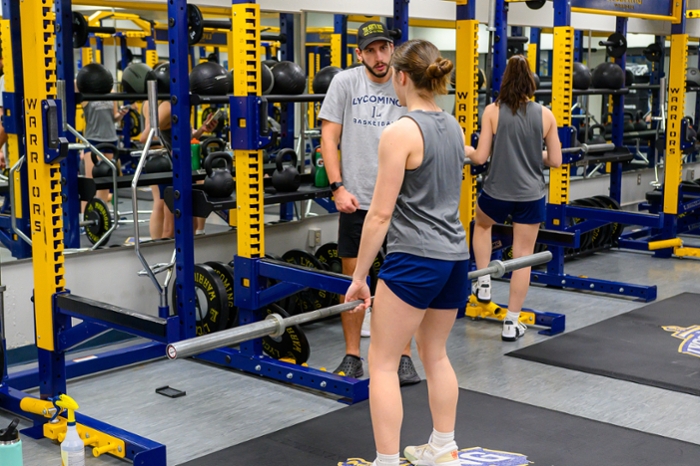
Download Image: Web
Lycoming College today announced the launch of a new academic program in exercise science, a dynamic and growing field at the intersection of biology, health, and human performance. The program was created in response to strong national demand for trained professionals in healthcare, rehabilitation, fitness, and athletic settings — an area that is expected to grow 9-14% by 2034.
Rooted in the biological and health sciences and enriched by Lycoming’s liberal arts tradition, the exercise science program integrates coursework in exercise physiology, anatomy, biomechanics, nutrition, and psychology. Students studying exercise science will develop a deep understanding of human movement, physical activity, and wellness through laboratory-based learning and real-world professional experiences beginning their first year at Lycoming College.
The program offers two flexible degree pathways to match students’ individual goals: The Bachelor of Arts degree is designed for students pursuing applied careers in personal training, health education, strength and conditioning, and athletic settings. The Bachelor of Science degree provides rigorous scientific preparation for students planning to pursue medical school, physical therapy doctoral programs, physician assistant programs, or graduate study in exercise science or kinesiology.
“Exercise science sits at a fascinating crossroads. It draws on physiology, biomechanics, nutrition, and psychology to help us understand what the human body is capable of and how to optimize it,” said David Andrew, Ph.D., assistant professor of biology and co-coordinator of the exercise science program. “Whether a student wants to work alongside athletes, help patients recover from injury, or go on to medical school, Lycoming’s exercise science program gives them the scientific foundation and the hands-on experience they need to succeed.”
“What excites me most about this program is that it meets students where they are, whether they're passionate about athletic performance, drawn to clinical healthcare, or still figuring out their path, and gives them the tools to pursue it with confidence,” said Mary Kate O'Donnell, Ph.D., assistant professor of biology and co-coordinator of the exercise science program. “Lycoming's size means students aren't just taking classes; they're working closely with faculty in the lab and building real skills from day one. The career possibilities are wide open.”
Graduates of the exercise science program will be well-positioned for careers or graduate studies across a wide range of health and performance fields including physical therapy, athletic training, strength and conditioning coaching, cardiac rehabilitation, personal training, health education, community wellness, and occupational health. Students who choose the B.S. pathway will also be prepared to compete for entry into medical school, physician assistant programs, and doctoral programs in physical therapy, kinesiology, or exercise physiology.
Students will have access to strong internship and professional experience opportunities through Lycoming’s connections to the Williamsport area healthcare community, including UPMC and Geisinger Medical Center, two major regional health systems with broad clinical and rehabilitation operations. These partnerships offer students valuable exposure to real-world healthcare and human performance settings before they graduate.
Consistent with Lycoming’s commitment to undergraduate research, exercise science students will have opportunities to collaborate with faculty on laboratory investigations in exercise physiology and human performance, and to present their findings in professional and academic settings.
More information on exercise science at Lycoming is available at www.lycoming.edu/exercise-science/.